Start Your Property Transformation Today
Transform Baldwin Land with Smart Clearing Solutions
Understanding Baldwin’s Land Clearing Needs
Baldwin sits in western Duval County where rural property meets genuine working land, and if you own acreage here, you already know the challenges. The soil drains fast thanks to the sandy base common throughout North Florida, but that same composition means vegetation bounces back aggressively after every summer rain cycle. Pine saplings, palmetto thickets, and invasive species like Chinese tallow don’t wait for permission to reclaim fence lines and old pasture edges.
Property owners in Baldwin face a specific set of conditions that make land management different from coastal Duval or the clay-heavy parcels you might find west toward Macclenny. The growing season runs long, roughly March through October, and humidity stays high enough that undergrowth can add noticeable density in just a few months. If you walked your property in February and it looked manageable, by July you might be looking at waist-high brush and saplings thick enough to stop a mower cold.
Seasonal flooding patterns matter too. Low-lying areas near creek tributaries can hold water through late winter and early spring, which limits access windows for heavy equipment. Many Baldwin landowners time their clearing projects for late fall through early spring when the ground firms up and the risk of afternoon thunderstorms drops. This also aligns with burn bans lifting in some areas, though modern forestry mulching methods have reduced the need for controlled burns on smaller residential and agricultural parcels.
The property types here vary widely. You might be clearing an old homesite overgrown since the last family moved out, prepping pasture for rotational grazing, or opening up timber land for a new build. Each scenario demands a different approach, but they all share one reality: Baldwin’s climate and soil will test any half-effort at vegetation control. What you clear this year will try to grow back next year unless you address the root systems and seed bank properly.
Why Property Owners in Baldwin Choose Professional Clearing
Most Baldwin property owners don’t call for clearing services because they enjoy spending money. They call because they’ve already tried the DIY route or because they understand the actual scope of what needs doing. A riding mower works fine for maintained lawn, but it won’t touch a four-acre tract with two-inch saplings and palmetto roots that go down three feet. A chainsaw and a weekend might clear a half-acre if you’re in good shape and the weather cooperates, but you’ll still face the question of what to do with the pile of debris.
Burn permits in Duval County require coordination with forestry services, and many residential parcels don’t meet setback requirements for open burning. That leaves hauling, which gets expensive fast when you’re talking about multiple truckloads to an approved disposal site. The math shifts quickly when you factor in your time, equipment wear, fuel costs, and disposal fees. Professional clearing starts looking reasonable once you run the actual numbers.
Then there’s the equipment question. Forestry mulching uses tracked machines with drum attachments that grind vegetation into mulch on-site, leaving a layer of organic material that suppresses regrowth and returns nutrients to the soil. This method skips the burn-or-haul dilemma entirely and produces a finished surface you can walk or drive on within days. Standard bush hogging just knocks down the tops and leaves root systems intact, which means everything grows back denser than before. For Baldwin’s aggressive undergrowth, that’s not a solution, it’s a delay.
Property owners also choose professional services when timelines matter. If you’re selling, subdividing, or building, the county and lender want to see cleared, accessible land with defined boundaries. A half-cleared property with brush piles stacked along the fence line doesn’t meet that standard. Professional crews bring enough equipment and crew capacity to finish in days what might take a landowner months of weekend work, and the finished product meets the visual and functional standards that inspectors, surveyors, and buyers expect.
Safety plays a role too. Operating heavy equipment on uneven terrain with hidden stumps, sinkholes, or old fence wire creates real risk. Professionals carry liability coverage and know how to read land for hidden hazards. If you hit an underground utility line or collapse an old septic tank, the repair costs and delays can exceed what you would have spent on professional clearing in the first place.
The Land Clearing Process and What to Expect
A proper clearing project in Baldwin starts with a site visit, not a phone estimate. Reputable contractors walk the property with you, mark boundaries, identify features you want preserved (specimen trees, fence lines, drainage paths), and note any complications like wet areas, steep slopes, or structures. They’ll ask about your end use because clearing for pasture looks different from clearing for a building pad or fire break. This visit usually takes thirty to sixty minutes depending on acreage, and it should be free.
Once you agree on scope and price, the contractor schedules based on weather and equipment availability. In Baldwin, expect some flexibility in the timeline during wet months. A site that’s accessible on Monday might be too soft to run heavy equipment by Friday if a storm system stalls overhead. Good contractors communicate when conditions change rather than tearing up your land and leaving ruts that take months to settle.
On the first day, the crew typically starts by cutting access paths and establishing staging areas for equipment. If you’re using forestry mulching, the operator will begin at one edge and work systematically across the site, grinding vegetation down to ground level. The mulch layer left behind is usually two to four inches deep and consists of shredded wood, leaves, and bark. It looks rough immediately after grinding but settles and darkens over a few weeks as it begins to decompose.
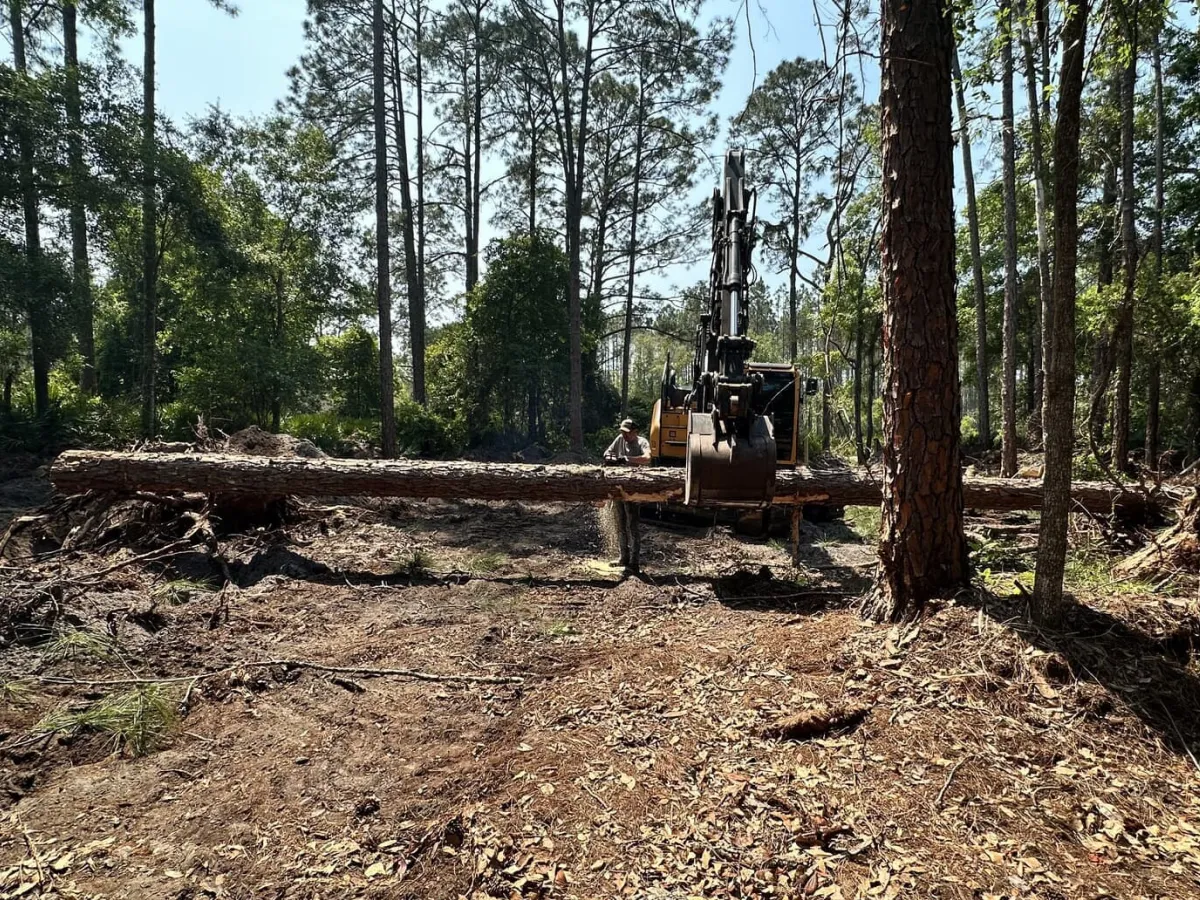
For larger trees or selective clearing, the crew may use excavators with grapple attachments to pull stumps or pile larger wood for removal. Stump grinding is often a separate service, quoted per stump or by diameter. If you plan to build or till the land, removing stumps makes sense. For pasture or natural areas, grinding stumps flush with the ground is usually sufficient, and the mulch layer will cover them.
Duration varies by density and acreage. A heavily overgrown two-acre tract might take two to three days with a single mulching machine. A ten-acre parcel with scattered pines and moderate undergrowth could take a week. Operators adjust speed based on terrain, vegetation density, and obstacles. Rushing creates an uneven finish and increases equipment breakdowns, so realistic scheduling matters more than aggressive promises.
After clearing, the contractor should walk the site with you to confirm the work meets your expectations. This is the time to point out missed sections, debris piles that need spreading, or areas that need touch-up. Most contractors include a final grading pass or smoothing run as part of the contract to ensure the surface drains properly and looks finished. You should be able to walk or drive the property without struggling through piles or deep ruts.
Choosing the Right Service Provider for Your Baldwin Property
Choosing a land clearing contractor in Baldwin shouldn’t come down to whoever answers the phone first or posts the lowest price on a Facebook marketplace ad. The difference between a capable crew and a fly-by-night operator shows up in the finished property and in whether problems get handled or ignored. Start by asking how long they’ve worked in Duval and surrounding counties. Contractors who know the area understand local soil conditions, typical vegetation, permitting requirements, and how to handle seasonal challenges like wet ground or fire ant mounds the size of truck tires.
Insurance and licensing aren’t negotiable. A legitimate excavation and land clearing operation carries general liability coverage and workers’ compensation for its crew. If someone gets hurt on your property and the contractor isn’t insured, you could be liable. Don’t take their word for it. Ask for certificate of insurance and verify it’s current. Licensing requirements for excavation work vary by county, but any contractor performing grading, stump removal, or site prep should be able to show credentials without hesitation.
Equipment condition tells you a lot. Well-maintained machines break down less, work faster, and produce cleaner results. If the mulcher head is worn down to nubs or the excavator leaks hydraulic fluid across your driveway, that’s a red flag. You don’t need to be a mechanic to spot neglected equipment. Look for clean cabs, intact safety guards, and operators who perform daily checks before starting work. Contractors who invest in their equipment usually invest in quality work too.
References matter more than online reviews, which can be gamed or faked. Ask for two or three recent projects similar in scope to yours, preferably within ten miles of Baldwin. Call those property owners and ask specific questions: Did the crew show up on time? Did they stay on budget? How did the property look when they finished? Would you hire them again? If a contractor hesitates to provide local references, that’s your answer.
Contracts should be written, clear, and specific. It should state the acreage or boundaries being cleared, the methods used (mulching, grubbing, hauling, etc.), what gets removed and what stays, the timeline, the payment schedule, and who handles permits or utility locates if needed. Avoid contractors who want full payment up front or who operate on handshake agreements. Deposit requests of 20 to 30 percent are standard, with the balance due on completion and your approval.
Finally, pay attention to communication. Does the contractor return calls? Do they explain options in plain language or try to upsell services you don’t need? Are they willing to adjust the plan based on your budget or priorities? You’re inviting someone onto your property with powerful equipment. You should feel confident they understand your goals and will handle problems professionally if they come up. AGON LLC has built its reputation in North Florida by showing up when scheduled, doing the work as agreed, and leaving properties in condition to use immediately. That’s the standard you should expect from anyone you hire.
Getting Started with Your Land Clearing Project
If you’re ready to move forward with clearing your Baldwin property, the first practical step is defining what success looks like. Walk your land and decide which areas need full clearing versus selective thinning. Mark trees you want to keep with flagging tape. Identify wet spots, old structures, or buried obstacles like concrete slabs or culverts. Take photos from multiple angles so you can communicate your vision clearly when contractors visit. The more specific you are up front, the more accurate the estimates will be and the fewer surprises you’ll face mid-project.
Check with Duval County or your HOA if applicable to see whether permits are required. Residential land clearing under a certain acreage often doesn’t require permits, but grading, filling, or work near wetlands or conservation easements might trigger review. If you’re unsure, a quick call to the county development services department can save you headaches. Most contractors can handle permitting as part of their service if it’s needed, but clarify who’s responsible before work starts.
Utility locates are non-negotiable. Call 811 or submit a locate request online at least two business days before the planned start date. This is free and flags underground power, gas, water, and telecom lines. Even rural Baldwin properties often have buried utilities running to wells, septic systems, or outbuildings. Hitting a line damages infrastructure, delays your project, and can result in fines or repair bills. Locate markings are usually valid for 30 days, so time your request accordingly.
Budgeting is easier when you know the variables. Per-acre pricing is common for larger tracts, while smaller lots may be quoted as flat project rates. Dense vegetation costs more to clear than light brush. Stump grinding, hauling, grading, and erosion control are typically separate line items. If budget is tight, ask about phased clearing where you tackle high-priority sections first and schedule the rest later. A good contractor will work with you to fit the project into your financial timeline rather than pushing you into more work than you’re ready to fund.
Once you’ve chosen a contractor and signed a contract, prepare the site by removing anything portable you don’t want damaged: fence panels, gates, equipment, tarps, or yard ornaments. Clear vehicle access to the work area and make sure the contractor knows where to park trailers or stage equipment. If neighbors share a driveway or might be affected by noise or traffic, give them a heads-up. Professional contractors respect neighboring properties, but a little courtesy goes a long way in rural areas where people know each other.
After the work is done, give the site a few weeks to settle before making final judgments on the results. Mulch will compact and darken. Dust will settle after the first rain. Grass seed or natural vegetation will start colonizing the cleared area, especially if you time the project for early spring or fall. If you notice areas that need touch-up or have questions about maintenance, contact your contractor while the project is still fresh. Most quality operators will come back for minor corrections without hassle.
AGON LLC serves Baldwin and the surrounding Duval County area with a straightforward approach: we assess your property, explain what’s needed, perform the work as agreed, and leave your land ready to use. If you’d like a free project estimate or want to discuss what clearing methods make sense for your situation, give us a call at 904-929-2466. We’re happy to walk your property and answer questions without pressure or obligation.